The Hidden Costs of Buying a Home in Northern Virginia (And How to Budget for Them)
You found the one. The kitchen has the granite counters you always dreamed about, the backyard backs up to trees, and the commute to Tysons Corner is actually manageable. You ran the numbers on the mortgage payment and thought, okay, we can do this. Then closing day arrived, and you realized you needed thousands more than you expected. Sound familiar? You are not alone.
Buying a home in Northern Virginia is one of the most exciting decisions you will ever make, and with a median sold price hovering around $730,000, it is also one of the biggest financial commitments of your life. The mortgage payment is only part of the story. There is a full cast of costs lurking beneath the surface that can catch even savvy buyers off guard. This guide is here to pull back the curtain on every one of them, so you walk into the process with eyes wide open and a budget that actually works.
Closing Costs: The Big Surprise on the Final Day
In Northern Virginia, closing costs typically run between two and five percent of the purchase price. On a $650,000 home, that is anywhere from $13,000 to $32,500 due at the closing table, on top of your down payment. These costs include lender fees such as origination charges, appraisal fees, and credit report fees. Then come title insurance, title search fees, attorney fees, and recording fees charged by the county. Virginia also collects a grantor tax and a recordation tax, and while sellers traditionally pay the grantor tax, everything is ultimately negotiable.
"In Northern Virginia, the combination of Virginia state taxes and local recordation fees means buyers should always budget at least 3% of the purchase price for closing costs alone, separate from any down payment."
One cost many buyers overlook is the prepaid items: homeowner's insurance premiums paid upfront, prepaid property taxes, and the initial escrow deposits your lender requires to fund your escrow account. These are not fees exactly, but they require cash on closing day just the same. Ask your lender for a Loan Estimate as early as possible. It is a federal requirement and your best roadmap to what you will actually owe on closing day.
Property Taxes by County: It Matters Where You Buy
Property taxes in Northern Virginia vary significantly depending on which county or city you land in, and the difference over a ten-year period can amount to tens of thousands of dollars. Fairfax County's effective tax rate sits around $1.13 per $100 of assessed value. Arlington County is slightly lower. Prince William County is often cited as one of the more affordable options in the region. Loudoun County, despite its rapid growth and higher home values, maintains competitive rates as well. Alexandria and Falls Church as independent cities have their own separate rate structures entirely.
What this means practically: two identical homes priced at $700,000 in different NOVA jurisdictions could carry annual tax bills that differ by $3,000 or more. Over thirty years, that gap compounds dramatically. When you are comparing homes across county lines, make sure you are comparing total monthly carrying costs, not just purchase prices.
HOA Fees: Monthly, Quarterly, or Annual, They Add Up
Northern Virginia is one of the most HOA-dense regions in the country. From the townhome communities of Ashburn and Woodbridge to the condo buildings of Arlington and the planned neighborhoods of South Riding, homeowner associations are everywhere. Monthly HOA fees in the region can range from under $100 for a modest single-family community to over $600 for a condo with amenities like a pool, fitness center, and concierge service.
Beyond the regular dues, pay close attention to special assessments. These are one-time charges levied on homeowners when major community repairs or improvements are needed. A new roof on a condo building, repaved parking lots, or a replaced elevator can result in assessments of several thousand dollars per unit with little advance notice. Always request the HOA's reserve fund study before you close. If the reserve is underfunded, the risk of a special assessment rises sharply.
Utilities in NOVA: Higher Than You Might Expect
Northern Virginia winters are genuine, and summers are hot and humid enough that your HVAC will work hard from June through September. The average monthly utility bill for a single-family home in the region can run $250 to $400 depending on the size of the home, its insulation quality, and the age of its heating and cooling systems. This is meaningfully higher than what many buyers moving from smaller homes or apartments are accustomed to paying.
Before you close, ask the sellers for twelve months of utility bills. Many sellers will provide them voluntarily, and your agent can request them as part of the disclosure process. Older homes built before modern insulation standards can carry utility costs that significantly alter the affordability calculation. Similarly, homes with older single-pane windows, original water heaters, or aging HVAC units deserve extra scrutiny because those systems are likely to demand replacement sooner rather than later.
Home Inspection and What Comes After
A thorough home inspection in Northern Virginia typically costs between $400 and $700 depending on the size of the home and the scope of the inspection. That is money well spent. What often surprises buyers is not the inspection cost itself, but what the inspection uncovers. Even in move-in-ready homes, inspectors routinely identify items that run into the thousands of dollars: worn roofs, water intrusion in basements, outdated electrical panels, HVAC systems approaching the end of their service life, or wood rot on exterior trim.
Some of these items become negotiating points, and a skilled real estate agent can help you use them to your advantage. Others simply need to be factored into your year-one budget. Many financial planners recommend setting aside one percent of the home's purchase price each year for maintenance and repairs. On a $650,000 home, that is $6,500 annually. In older homes, that figure should be higher.
Moving Costs and Immediate Upgrades
People routinely underestimate what it costs to actually move. Hiring a full-service moving company for a local move within Northern Virginia can run anywhere from $1,500 to $5,000 or more depending on the size of your household. Storage fees, packing supplies, and temporary accommodations during the transition all add to the total. Factor these in before you sign anything.
Then there are the immediate upgrades. Very few buyers move into a home and change nothing at all. Paint, new locks, landscaping touch-ups, blinds or curtains, a new appliance or two, and perhaps a furniture update to fit the new space. These costs vary wildly, but budgeting $5,000 to $15,000 for first-year post-purchase expenses is not at all unusual for NOVA buyers.
How to Build a Realistic Budget Before You Shop
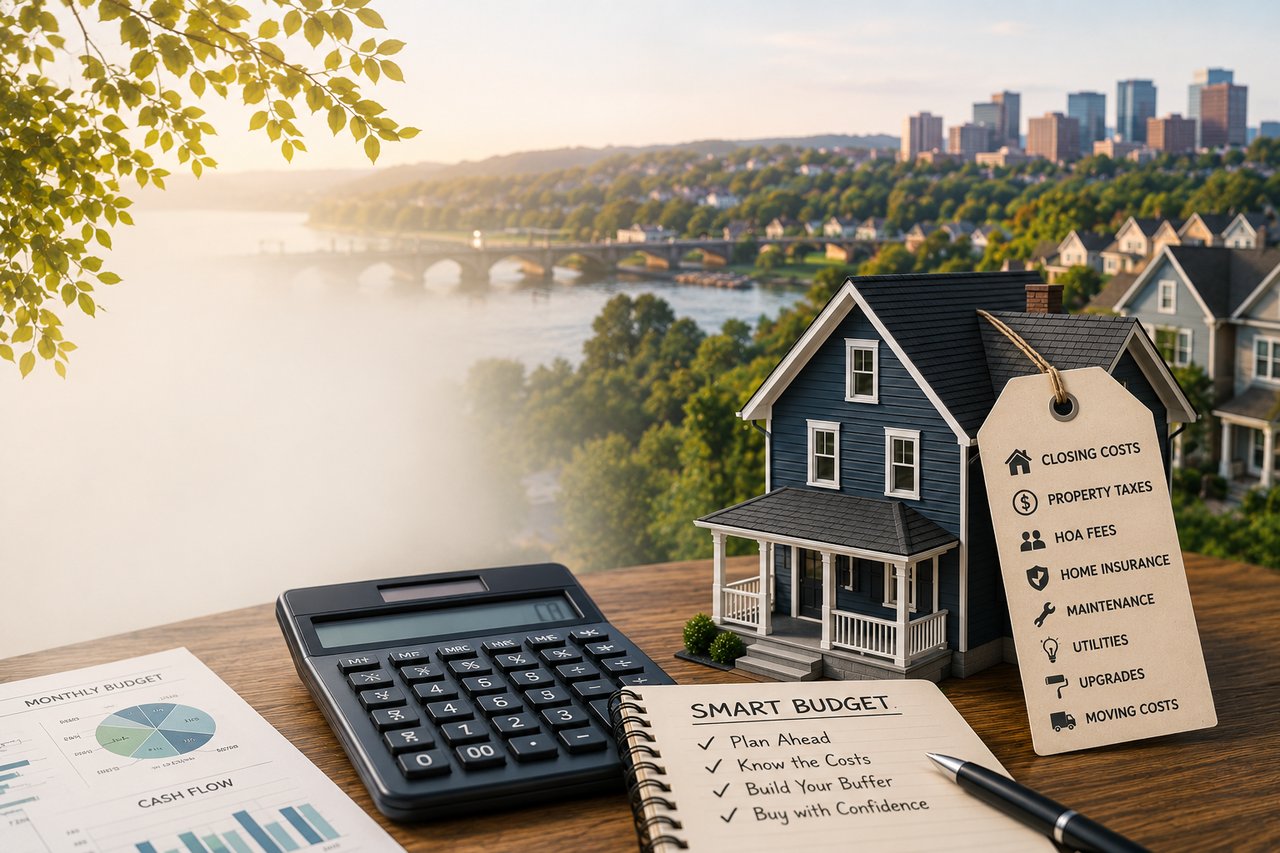
The single most powerful thing you can do before you start touring homes is to sit down with a trusted lender and a real estate professional who knows the Northern Virginia market deeply. Get pre-approved for a mortgage so you understand your true ceiling. Then work backward from that number, subtracting not just your expected mortgage payment but the full carrying costs: taxes, HOA fees, insurance, utilities, and a maintenance reserve. The number you arrive at is your actual monthly cost of ownership, and it is the number that should guide your home search from day one.
At metroHouse, we help buyers do exactly this. We know the Northern Virginia market county by county, neighborhood by neighborhood, and we take pride in making sure our clients are fully prepared financially before they fall in love with a home. Because the best home purchases are not just emotional triumphs. They are smart financial ones too.